
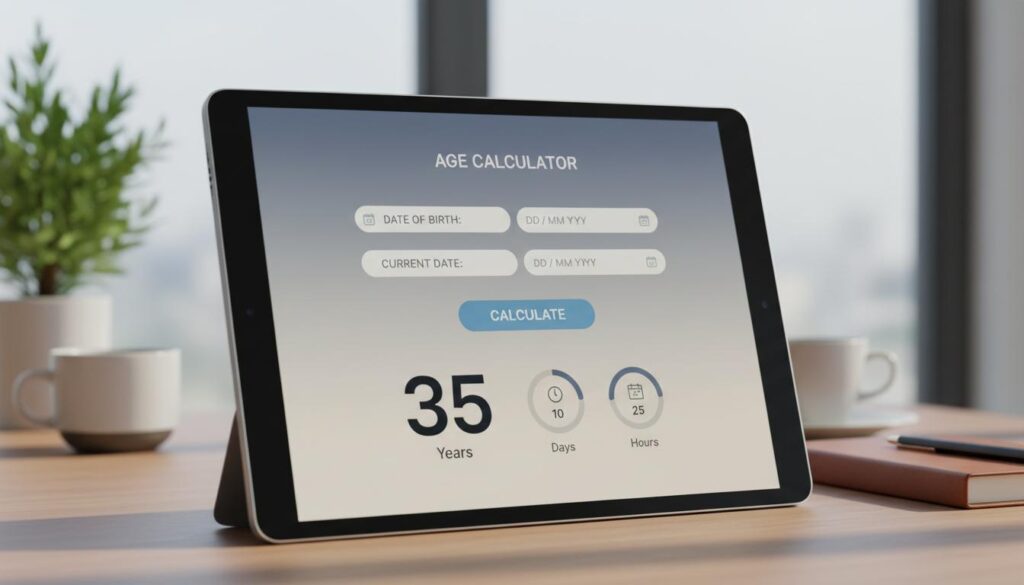
How old are you today—precisely? Not “twenty-something,” not “about to turn,” but your exact years, months, and days. That’s what a dependable age calculator does, and in Canada, the answer matters more often than most people realize. It affects when you can sign a contract, buy cannabis in Quebec, get a learner’s licence in Ontario, open a TFSA in British Columbia, qualify for seniors’ fares, or score more points for Express Entry. This guide shows you how to calculate age correctly, the Canadian rules and cutoffs that hinge on it, and how to avoid the little mistakes that can cause big headaches.
We’ll break down how an age calculator works, why leap years and date formats can trip people up, and what counts as your legal “birthday” for different purposes. You’ll also find tables for quick reference—age of majority by province and territory, drinking and cannabis ages, and major milestones in one view—plus clear, step-by-step methods to compute ages without any tool at all. If you’ve ever wondered “how old am I today?” or needed an age difference calculator for forms, applications, or benefits, you’re in the right place.
What Exactly Is an Age Calculator?
An age calculator is a simple tool that converts two dates into a person’s chronological age—usually the time between a date of birth and today. Some go further, giving you age in months, days, or even hours. Others handle related tasks: finding your next birthday, calculating age differences, or counting down to a milestone (like turning 18 in Alberta, or 19 in Nova Scotia).
Behind the scenes, a good age calculator follows calendar rules accurately, including leap years and the number of days in each month. It doesn’t guess or round; it subtracts dates and returns an exact value. That’s crucial when a single day decides whether someone can enter a bar in Vancouver, qualify for a youth transit pass in Toronto, or open a TFSA in New Brunswick. Accuracy matters.
If you prefer not to enter your date of birth into a website, you can still compute your age manually or use a local spreadsheet. This guide shows you precise methods either way, so you can decide what’s best for your situation.
How Canadians Define and Use Age: The Basics
In everyday life, age is the number of full years since your date of birth. If you were born on July 12, 2008, you turn 16 on July 12, 2024. Pretty simple. But Canadian legal contexts add nuance: some rights or benefits start at the stroke of midnight on your birthday; others rely on cut-off dates (e.g., “on or before December 31”). A well-built Canadian age calculator is designed with those realities in mind.
Calendar Math 101: Years, Months, Days
Age calculation isn’t just “current year minus birth year.” You must check if the month and day have passed this year. Here’s the idea:
- If today’s month-day is after your birth month-day, your birthday has occurred this year; subtract years directly.
- If it’s before, your birthday hasn’t happened yet; subtract one from the year difference.
For months and days (when you want exact months/days as well as years), proper calculation borrows days from the previous month if needed and handles month lengths correctly. February complicates things, especially in leap years (29 days) versus common years (28 days). Good age calculators follow the Gregorian calendar rules consistently.
What Counts as “Turning” an Age in Canada?
For most legal purposes in Canada, you reach a new age at 12:00 a.m. local time at the start of your birthday. This midnight rule matters in contexts like age of majority or age-restricted purchases. Officially, your birth certificate is tied to a location and time, but age-based eligibility typically flips on the calendar date where you are, not the minute you were born.
That said, always check the specific law or policy behind what you’re doing. Employment rules, licensing, and benefits can include their own timing provisions or grace periods (e.g., “as of the first day of the month you turn 65”). If you’re close to a cutoff, precision is your friend.
Leap-Year Birthdays (February 29)
People born on February 29 don’t get an annual calendar match in non-leap years. So, when do they “turn” an age in those years? In many Canadian statutes and administrative practices, March 1 is treated as the anniversary of a February 29 birth in non-leap years. In other contexts, February 28 is used informally. If you’re dealing with a rule with consequences (e.g., a benefit or a licence), check the policy or speak to the responsible office. A trustworthy age calculator should have a clear rule for Feb 29 handling and allow you to see how it arrived at the result.
Canadian Date Formats: Avoiding Costly Mix-Ups
Canada officially uses ISO 8601 date format (YYYY-MM-DD) in many government and business contexts because it reduces confusion. But Canadians still encounter both DD/MM/YYYY and MM/DD/YYYY in day-to-day life thanks to cross-border content and legacy forms. An age calculator that asks for “01/07/2005” should make it absolutely clear whether that means January 7 or July 1. When in doubt, use the ISO format or month names (e.g., “1 July 2005”). It’s a small step that prevents identity checks, travel bookings, and forms from going sideways.
How to Calculate Age Manually (No Tool Needed)
Maybe you’re filling out a paper form. Maybe you don’t want to share your date of birth online. Either way, you can compute age quickly and accurately by hand.
Quick Mental Method for Years
- Subtract the birth year from the current year.
- If today is before the birthday (month/day), subtract 1.
Example: Today is June 30, 2026. Birthdate is July 1, 2005. Year difference is 21, but the birthday hasn’t happened yet this year—so the age is 20.
Exact Years, Months, and Days (Borrowing Method)
- Write the current date (YYYY-MM-DD) and birth date.
- If the current day is less than the birth day, borrow days from the previous month:
- Reduce the current month by 1.
- Add the number of days in the new current month to the current day (28, 29, 30, or 31 depending on the month and leap year).
- Subtract days: current day minus birth day = day component.
- If the current month is less than the birth month, borrow 1 year:
- Reduce the current year by 1.
- Add 12 to the current month.
- Subtract months: current month minus birth month = month component.
- Subtract years: current year minus birth year = year component.
This yields an exact, calendar-correct result. It’s the same approach a robust age calculator uses internally.
Worked Examples
Example A: Today = 2026-06-30, Birth = 2005-07-01
- Day: 30 vs 1 → 30 − 1 = 29 days (no borrow needed because 30 ≥ 1)
- Month: 6 vs 7 → 6 is less than 7, so borrow 1 year: year becomes 2025, month becomes 18 (6 + 12).
- Months: 18 − 7 = 11 months.
- Years: 2025 − 2005 = 20 years.
- Age: 20 years, 11 months, 29 days.
Example B: Today = 2024-03-01, Birth = 1992-02-29 (leap day)
- 2024 is a leap year; March 1 follows a 29-day February.
- Day: 1 vs 29 → need to borrow. Borrow 29 days from February 2024:
- Current month reduces from 3 to 2.
- Current day becomes 1 + 29 = 30.
- Days: 30 − 29 = 1 day.
- Months: 2 vs 2 → months = 0.
- Years: 2024 − 1992 = 32 years.
- Age: 32 years, 0 months, 1 day (assuming your rule considers Feb 29 anniversary on Mar 1 in non-leap contexts, this aligns with many Canadian practices).
Why an Age Calculator Matters in Canada: Real-World Use Cases
Canadian life is full of age-based gates. A single day can change your rights. If you’re using an online age calculator, it should give precise results and help you plan around provincial differences. Here are the most common places Canadians rely on exact age.
Age of Majority and Contracts
The age of majority determines when you can sign most contracts without a parent or guardian. It’s 18 in some provinces and 19 in others. That single difference shapes when you can get a credit card alone, rent an apartment, or sue and be sued in your own name. If you’re on the cusp, an exact “years, months, days” calculation avoids awkward surprises at a bank counter or notary office.
Alcohol, Cannabis, and Entertainment Venues
Alcohol laws differ from cannabis laws, and both vary by province or territory.
- Alcohol purchase and entry to licensed venues: 18 in Alberta, Manitoba, and Quebec; 19 everywhere else.
- Cannabis: 18 in Alberta, 21 in Quebec, and 19 everywhere else.
That’s not trivia—it’s road-trip practical. A 19-year-old who can buy wine in Regina can’t legally buy cannabis in Montreal. Bars, cannabis stores, and event venues use strict ID checks. An age calculator helps you confirm eligibility to the day, especially around birthdays.
Driving, Car Rental, and Insurance
Every province has its own licensing ladder, but a common theme is the earliest age for a learner’s permit (often 16) and graduated stages before a full licence. For example, Ontario’s G1 can be written at 16, and the graduated journey to a full G takes time. BC’s L and N stages have similar staging. Knowing the exact age and days since a previous test matters because waiting periods are calendar-based.
Car rentals in Canada typically require renters to be at least 21 or 23, with surcharges for drivers under 25. Each company sets its policy by province and location, and many refuse high-performance classes to drivers under 25. If you’re planning a Yukon road trip at 24 years and 10 months, an age calculator lets you find out if turning 25 two weeks into your itinerary will drop the fee.
Insurance rates are also age-sensitive. While insurers mostly consider experience and claims history, age bands still influence premiums—especially under 25. Precision helps when getting quotes in the months leading up to a birthday.
Money Milestones: TFSA, RRSP, RESP, Credit, and Benefits
Age and finance intersect in very Canadian ways:
- TFSA: Contribution room starts the year you turn 18 if you’re a resident with a valid SIN. However, in provinces and territories where age of majority is 19 (e.g., BC, NS, NB, NL, NT, NU, YT), you generally can’t open a TFSA until you reach majority. Your room still accumulates from 18 and carries forward.
- RRSP: You can contribute until December 31 of the year you turn 71; age calculators help with end-of-year planning.
- RESP and CESG: Government grants generally apply until December 31 of the year the beneficiary turns 17, with specific contribution history conditions at 16 and 17. Knowing the exact year and date avoids leaving grant money on the table.
- Canada Child Benefit (CCB): Generally available for children under 18. If your child turns 18 mid-year, eligibility changes. Age calculators paired with month-based benefits planning are useful at tax time.
- Credit cards and loans: Lenders often require you to have reached the age of majority in your province or territory. Under-majority applicants may need a co-signer.
- Old Age Security (OAS) and GIS: OAS typically starts at 65, with options to defer for a higher monthly amount. An exact birthday count can matter if your first payment depends on the month you reach 65.
Education and Youth Programs
School entry and child programming often use “turns age X by date Y” rules. For example:
- Kindergarten eligibility commonly requires a child to turn five by December 31 of the school year in several provinces, though local boards set specific policies.
- Ontario’s junior kindergarten typically begins the calendar year a child turns four by December 31, while kindergarten is voluntary. Always verify with your school board.
- Youth sport leagues, camps, and arts programs often use “born in 20XX” or “as of August 31/December 31” cutoffs. A precise age calculator clarifies eligibility across overlapping age groups.
Health, Consent, and Vaccinations
Consent laws for medical treatment in Canada are capacity-based in several provinces rather than tied strictly to a specific age. For example, British Columbia’s Infants Act allows capable minors to consent to their own treatment; Ontario’s Health Care Consent Act similarly focuses on capacity, not age. Quebec generally allows youth 14 and older to consent to many forms of care, with more safeguards for serious interventions. If you’re coordinating care or vaccination appointments, use an age calculator for clarity and pair it with the capacity or consent rule in your province.
Immigration and Work Permits
Age affects immigration scoring. In Canada’s Express Entry CRS system, the maximum age points are typically awarded to applicants in their 20s and decline as you pass 30, with no age points at 45 and older (you can still qualify through other factors). The difference between 29 and 30, or 30 and 31, can shift the score noticeably. An age calculator reduces guesswork when you’re planning an application window.
For work permits and study permits, you’ll also encounter age-based policies for dependants, post-graduation work permits, and some provincial programs targeting youth or recent graduates. Precise, documented ages help prevent processing delays.
Travel, Hotels, and Fares
Hotels and hostels often require the age of majority to check in; some properties set higher minimums or require a credit card in the guest’s name. Airlines, buses, and trains have specific child, youth, adult, and senior fare brackets, sometimes keyed to the travel date and sometimes to the booking date. An age difference calculator can also help families determine if two siblings qualify for the same youth tier on the same trip—small details that save money.
Canadian Age Rules at a Glance
Tables make life easier. Bookmark this section whenever you need a quick reference.
Age of Majority by Province and Territory
| Province/Territory | Age of Majority |
|---|---|
| Alberta | 18 |
| British Columbia | 19 |
| Manitoba | 18 |
| New Brunswick | 19 |
| Newfoundland and Labrador | 19 |
| Nova Scotia | 19 |
| Ontario | 18 |
| Prince Edward Island | 18 |
| Quebec | 18 |
| Saskatchewan | 18 |
| Northwest Territories | 19 |
| Nunavut | 19 |
| Yukon | 19 |
Crossing a provincial boundary can flip your “majority” status for practical purposes. An age calculator paired with a location-specific policy check is the safest route.
Legal Ages for Alcohol and Cannabis
| Province/Territory | Alcohol Purchase/Entry to Licensed Venues | Cannabis Purchase/Possession |
|---|---|---|
| Alberta | 18 | 18 |
| British Columbia | 19 | 19 |
| Manitoba | 18 | 19 |
| New Brunswick | 19 | 19 |
| Newfoundland and Labrador | 19 | 19 |
| Nova Scotia | 19 | 19 |
| Ontario | 19 | 19 |
| Prince Edward Island | 19 | 19 |
| Quebec | 18 | 21 |
| Saskatchewan | 19 | 19 |
| Northwest Territories | 19 | 19 |
| Nunavut | 19 | 19 |
| Yukon | 19 | 19 |
Always pair this with local retail and venue rules. Many businesses enforce ID checks more strictly than the law requires, especially in big cities like Toronto, Vancouver, and Montreal.
Common Age-Based Milestones in Canada
| Milestone | Typical Age | Notes |
|---|---|---|
| Learner’s permit (e.g., ON G1, BC L) | 16 | Exact requirements vary by province; road tests have wait periods. |
| Age of majority | 18 or 19 | See provincial table. |
| Alcohol purchase | 18 or 19 | 18 in AB, MB, QC; 19 elsewhere. |
| Cannabis purchase | 18, 19, or 21 | 18 in AB; 21 in QC; 19 elsewhere. |
| TFSA eligibility (contribution room begins) | 18 | Opening an account may require age of majority in your province. |
| Vote in elections | 18 | Federal, provincial/territorial, and most municipal. |
| CPP retirement (earliest) | 60 | Reduction applies if taken early; increase if deferred. |
| Old Age Security (OAS) | 65 | May defer to 70 for a higher monthly amount. |
| Senior fares (transit) | Often 65+ | Check your local system (e.g., TTC, TransLink); definitions vary. |
Choosing or Building the Right Age Calculator
Not all tools are created equal. If you’re using a Canadian age calculator online or building one for your team, a short checklist pays back quickly.
Features That Actually Help
- Clear date input format with examples (ideally ISO 8601 or month name inputs).
- Exact results in years, months, days; optional weeks and total days.
- Next birthday and days-until-birthday readouts.
- Age difference calculator (e.g., between two siblings, teammates, or applicants).
- Leap-year handling, including a transparent rule for Feb 29.
- Time zone consistency (local time by default, unless you specify otherwise).
- “As of” date option so you can compute age for forms due in the future or past.
- Optional Canadian presets (e.g., flag if 18/19/21 thresholds are met based on a selected province or territory).
Privacy and Security Considerations
Your date of birth is sensitive personal information. Before entering it anywhere, consider:
- Does the site run the age calculator locally in your browser, or does it transmit your date to a server?
- Is there a clear privacy policy? Is data stored? For how long? For what purpose?
- Is the connection encrypted (https)?
- Is there a “no-save” or “local-only” mode?
If privacy is a concern, use an offline method: a spreadsheet in Excel or Google Sheets (offline mode) or a simple calculator app that never leaves your device. In Canada, PIPEDA governs how businesses handle personal information; even so, your safest bet is to share the least data necessary.
Spreadsheet Formulas (Excel and Google Sheets)
Spreadsheets make excellent local age calculators. Several robust methods exist:
- Excel:
- Exact years: =DATEDIF(BirthDate, AsOfDate, “Y”)
- Months remainder: =DATEDIF(BirthDate, AsOfDate, “YM”)
- Days remainder: =DATEDIF(BirthDate, AsOfDate, “MD”)
- Google Sheets:
- Same DATEDIF formulas as Excel.
- Or use YEARFRAC for decimal years: =YEARFRAC(BirthDate, AsOfDate)
DATEDIF handles a lot of edge cases well, including leap years. Pair these with data validation for date inputs and an “As of” date cell so you can compute age for any scenario—today, next month, or a form’s deadline date.
Age Difference and “Next Birthday” Tools
Two small add-ons make a simple age calculator far more useful:
- Age difference calculator: compute the gap between two dates of birth to the day. It’s popular for sports teams, classrooms, and HR record-keeping.
- Next birthday calculator: return the next birthday date and how many days away it is. Parents use this for planning, and anyone chasing airline status or credit card anniversary benefits will appreciate the reminder.
Edge Cases and Tricky Scenarios Canadians Ask About
Sometimes a one-line age result isn’t enough. These common scenarios surface in schools, clinics, courts, and HR offices.
Born Abroad, Now in Canada: Which Clock Rules?
Your birth certificate reflects the date and time where you were born. But most Canadian age-based rules flip on the calendar date where you are now, at local midnight. If you were born late at night in one time zone and move across the country, you don’t need to track the original time zone for everyday eligibility. Do keep your official documents consistent: passport, health card, and immigration files should all reflect the same birth date.
Premature Babies and Corrected Age
In pediatric and developmental contexts, “corrected age” (also called “adjusted age”) is sometimes used for premature infants. Corrected age = chronological age minus the number of weeks early. This is mostly for clinical tracking of growth and milestones, not legal eligibility for benefits or school. A fully featured age calculator for clinics may include a corrected age option, but for passports, benefits, and tickets, chronological age is the rule.
Youth Sports: Cutoff Dates and Fair Play
Minor hockey, soccer, gymnastics, and other sports use fixed cutoffs (e.g., “U13 for children born in 2012”). Leagues in Canada commonly follow a calendar-year system, though some use school-year or custom dates. If your child barely misses a cutoff, double-check the league’s policy; some allow play-up or play-down for safety or development. An age difference calculator can help coaches organize fair and safe groupings.
Court Deadlines and Limitation Periods
Limitation periods (deadlines to start a lawsuit) can pause while a person is a minor. The pause generally ends when the person reaches the age of majority in their province or territory, then the clock starts. Because rights can hinge on the exact day, use an “as of” date in your computations and confirm the applicable legislation or speak with a legal professional.
Practice Makes Permanent: Real-World Canadian Scenarios
Here are concrete examples to show how a Canadian age calculator works in daily life.
1) Ontario G1 Eligibility
Birth: 2009-08-15. Today: 2025-08-14. In Ontario, you can write the G1 at 16. On August 14, 2025, this person is still 15 years, 11 months, 30 days. They become eligible at 00:00 on 2025-08-15.
2) TFSA in British Columbia
Birth: 2006-10-10. Province: BC (age of majority 19). TFSA contribution room accumulates from the calendar year the person turns 18 (2024 for this birthdate). However, they cannot open a TFSA until they reach 19 on 2025-10-10. The room that accumulated in 2024 carries forward to 2025 when the account can be opened.
3) Buying Cannabis in Quebec
Birth: 2005-07-01. City: Montreal. Cannabis age in Quebec is 21. On 2026-06-30, the person is 20 years, 11 months, 29 days—still ineligible. Eligibility flips at 00:00 on 2026-07-01.
4) Alcohol Purchase on a Road Trip
Birth: 2007-03-05. In Regina (SK), alcohol age is 19. On 2026-03-04, the person is 18 years, 11 months, 28 days—no sale. In Winnipeg (MB), alcohol age is 18. On 2025-03-05 they were eligible all day; that same person would be refused in Regina on the same birthdate by a full year. Provincial differences matter.
5) Youth Transit Fare in Toronto
Many Canadian transit systems define child, youth, and senior fares by ages on the date of travel. If a child turns 13 on the trip date, the fare class can change that day. A parent with two kids born 2013-04-30 and 2010-12-01 can use an age difference calculator to see who still qualifies for youth and who moves to adult pricing on specific trips. Because TTC, TransLink, and OC Transpo have different brackets, always check local rules.
6) Express Entry Points Timing
Birth: 1996-11-20. Age points reduce after your 30th birthday. If you submit an Express Entry profile on 2026-11-19, you’re still 29. On 2026-11-20 at 00:00 local time, you’re 30, and CRS age points will reflect that in your profile. Using an “as of” date in your age calculator helps plan submissions.
7) Student discount eligibility
Birth: 2003-12-31. Some museums or services accept student IDs without strict age caps; others use “under 25” rules. On 2028-12-30, the person is 24 years, 11 months, 30 days and likely eligible. On 2028-12-31 at midnight, they flip to 25—eligibility may end immediately depending on the policy’s wording.
8) RESP and CESG Cutoff
Beneficiary birth: 2009-01-01. CESG generally applies until December 31 of the year the child turns 17, subject to contribution history conditions. The last potential grant year is 2026 (turns 17 on 2026-01-01). An age calculator confirms the calendar relationship and prevents missed deadlines.
9) Hotel Check-In in Halifax
Birth: 2007-09-10. Nova Scotia’s age of majority is 19. Some hotels require the guest checking in to have reached majority and hold the credit card. On 2026-09-09, this person is 18 years, 11 months, 30 days—likely ineligible to book alone. On 2026-09-10, eligibility flips at midnight.
10) Senior Discount at a Recreation Centre
Birth: 1961-04-15. Many recreation centres offer senior pricing at 65+. On 2026-04-14, this person is 64 years, 11 months, 30 days. On 2026-04-15 at 00:00, they meet the age threshold. Some programs apply changes from the first of the month; always verify with the facility.
Accuracy Tips for Any Age Calculator
A few habits keep your age calculations tight and trusted:
- Use ISO dates (YYYY-MM-DD) to avoid month/day confusion.
- Set an explicit “as of” date when filling out forms that will be processed in the future—and keep a copy.
- For Feb 29 births, confirm the policy: many official rules treat March 1 as the anniversary in non-leap years.
- When the stakes are high (immigration, legal filings, financial contracts), print or save a screenshot of your age calculator result with the inputs visible.
- Remember provincial differences (18 vs 19 for majority; 18 vs 19 vs 21 for cannabis).
Behind the Scenes: How a Good Age Calculator Handles Leap Years
Leap years occur every year divisible by 4, except centuries not divisible by 400. That means 2000 was a leap year; 1900 was not; 2024 was; 2100 will not be. February’s 29th day is the classic pitfall. The best age calculators handle these correctly:
- When borrowing days across February, they use 29 days in leap years, 28 days otherwise.
- They compute differences without approximations (no “30 days per month” shortcuts).
- They document their Feb 29 policy for non-leap years.
Many off-by-one errors you see online trace back to a sloppy leap-year rule or a borrowed-day mistake around February. If you test an age calculator, include Feb 29 cases.
Date Differences Beyond Age: Useful Add-Ons
Once you have a solid date engine, you can build more than an “How old am I” calculator:
- Service anniversaries for HR (years, months, days since hire date).
- Limitation deadlines (X years from an incident date), with calendar correctness.
- Schooling eligibility (age as of a specific September 1 or December 31 rule).
- Vaccination schedules keyed to exact months and days for infants.
These tools use the same principles: careful borrowing, correct month lengths, and a visible “as of” date.
When a Human Review Beats Any Calculator
Not every rule matches a simple birthday. Examples:
- Benefits that start on the first day of the month you turn a certain age.
- Programs keyed to school years rather than birthdays.
- Grandfathered policies with one-time cutoff dates.
In those cases, an age calculator gives a precise foundation, but you still need to read the policy text. If a call centre or service desk must verify eligibility, bring ID and a printout that shows the date math for the “as of” date you’re applying under.
Building Trust: Documenting Your Age Calculation
When you submit forms to a Canadian authority—schools, government programs, insurers—small documentation steps add credibility:
- Include dates in ISO format across all documents (YYYY-MM-DD).
- If the policy uses a cutoff (“as of December 31”), write both your birth date and the exact age “as of” that date.
- Attach a one-line explanation for leap-day births if applicable.
- For shared custody or complex family arrangements, show both children’s ages with the same “as of” date to simplify eligibility discussions.
Troubleshooting: Common Age Mistakes and How to Avoid Them
Small errors cause big delays. Here are the pitfalls an age calculator can prevent:
- Month/day swaps: 04/07 vs 07/04. Use month names or ISO.
- Off-by-one at midnight: remember most eligibility flips at 00:00 on the birthday.
- Wrong province’s age rule: moving from Manitoba to Saskatchewan won’t change majority (both 18), but Manitoba to BC will (18 vs 19).
- Assuming an age is valid for all products: Quebec cannabis is 21, even though alcohol is 18.
- Forgetting that RESP grants end the year the beneficiary turns 17 (subject to conditions) and TFSA room begins at 18 even if you can’t open until provincial majority.
Accessibility and Bilingual Considerations
In Canada, accessible and bilingual design is not just courteous; it’s often expected:
- Use plain language on labels: “Date of birth (YYYY-MM-DD)” beats “DOB.”
- Offer French and English options; month names prevent numeric confusion (e.g., “15 janvier 2008”).
- Include keyboard-only navigation and screen reader support.
- Explain leap-year handling clearly in both languages for Feb 29 users.
Testing an Age Calculator: A Canadian Checklist
If you’re evaluating or building a tool, test with these cases:
- Standard: Birth 2000-01-01, as of today; verify years, months, days.
- Pre-birthday and post-birthday within the same year.
- Leap-day births: 1992-02-29 with as-of dates in leap and non-leap years.
- End-of-month boundaries: Jan 31 to Feb 28/29; Aug 31 to Sep 30.
- Province-specific thresholds: flag whether “18 in Alberta” is met, and “19 in BC” is met, for the same person on the same day.
Security Tip: Keep Your Date of Birth Safe
Your date of birth is a key identity data point. In combination with your name and address, it can unlock accounts or pass security checks. When using an online age calculator, prefer tools that either:
- Run fully in your browser without storing inputs; or
- Clearly state that they don’t save or share personal data.
If unsure, stick to a local spreadsheet. On public computers—like a library in Calgary or a school lab in Ottawa—avoid entering your birth date into any website you don’t control.
The Bottom Line
Age isn’t just a number; it’s a set of doors that open and close based on exact dates—especially in Canada, where provincial differences and leap-year quirks keep things interesting. A reliable age calculator should be transparent, precise, and respectful of privacy. Whether you’re timing a TFSA in Vancouver, planning a birthday legal to buy wine in Toronto, or squeezing in an Express Entry profile before your next birthday in Edmonton, knowing your exact age to the day can save time, money, and frustration.
FAQ
What is the most accurate way to calculate my age?
Use a method that respects actual month lengths and leap years. A trustworthy age calculator or the DATEDIF function in Excel/Google Sheets will give exact years, months, and days. Avoid approximations like “30 days per month.”
Do I legally turn a new age at midnight or the time I was born?
For most Canadian legal purposes, you reach a new age at 12:00 a.m. local time on your birthday. When in doubt for a specific program or benefit, check the policy language.
How do I handle February 29 birthdays in non-leap years?
Many Canadian statutes and policies treat March 1 as the anniversary in non-leap years. Some informal contexts use February 28. If eligibility or money is on the line, confirm the rule with the relevant authority.
Can I open a TFSA at 18 everywhere in Canada?
Your TFSA contribution room starts the year you turn 18 if you’re a resident with a SIN. But opening an account generally requires you to be the age of majority in your province or territory (19 in BC, NB, NL, NS, NT, NU, YT). The room you accrue at 18 carries forward until you can legally open the account.
What’s the age of majority in my province or territory?
Age of majority is 18 in Alberta, Manitoba, Ontario, Prince Edward Island, Quebec, and Saskatchewan; it’s 19 in British Columbia, New Brunswick, Newfoundland and Labrador, Nova Scotia, Northwest Territories, Nunavut, and Yukon.
What are the legal ages for alcohol and cannabis in Canada?
Alcohol: 18 in Alberta, Manitoba, Quebec; 19 elsewhere. Cannabis: 18 in Alberta, 21 in Quebec, and 19 everywhere else.
I’m turning 19 next month. Can I buy alcohol in Ontario now if I’m already 19 in Manitoba?
No. Your age is your age; what changes is the provincial legal threshold. In Ontario, the alcohol threshold is 19. If you’re 18 years and 11 months, you’re underage in Ontario regardless of Manitoba’s lower threshold.
Do time zones affect my legal age?
Not in the way most people think. Eligibility typically flips at 00:00 local time where you are on the date of your birthday. You don’t need to match the time zone where you were born for everyday legal purposes.
Is my child eligible for kindergarten if they turn five late in the year?
Many provinces use “turn 5 by December 31” rules, but specifics are set by school boards. Check your local board’s policy. An age calculator with an “as of Dec 31” option makes this easy.
How do I calculate corrected age for a premature baby?
Corrected age = chronological age minus weeks early. This is primarily for clinical and developmental contexts, not legal age. Ask your care provider how they want dates tracked on forms.
Will I get more CRS points for Express Entry if I submit right before my birthday?
Possibly. CRS age points typically decline after certain birthdays (e.g., after 29). Use an age calculator with an “as of” date to plan your timing, and confirm with current IRCC guidance before submitting.
Do senior discounts in Canada always start at 65?
No. Many do, but some start earlier or later. Transit systems, museums, and retailers set their own policies. Always check the specific provider’s age rule and whether it’s “on your 65th birthday” or “on the first of the month you turn 65.”
Is it safe to use an online age calculator with my date of birth?
It depends. Prefer tools that compute locally in your browser and don’t store data. Look for https, a clear privacy policy, and a “no-save” statement. If uncertain, use a local spreadsheet.
Why do some calculators show different results for the same dates?
Usually because of leap-year handling, end-of-month borrowing, or different rules for Feb 29. Use one that documents its method, and test it with a known leap-year example.
Can I use an age difference calculator for team eligibility?
Yes. It shows the exact gap between two birth dates. Pair it with the league’s cutoff rules (e.g., “born in 2012”) to ensure players are grouped correctly.