
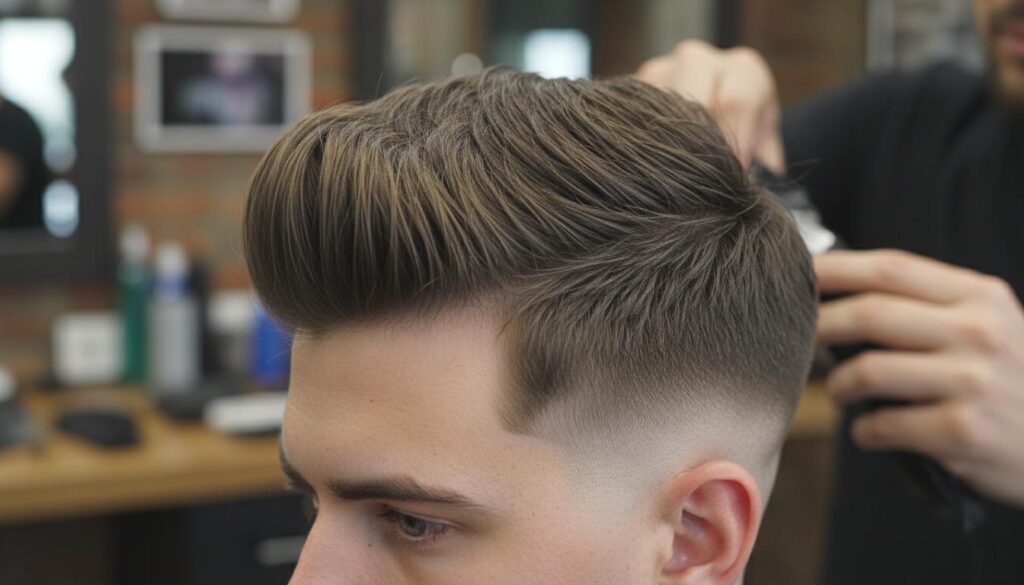
The blowout taper has the kind of staying power most trends only dream about. It’s clean at the edges, full of life on top, and flexible enough to fit a Bay Street boardroom, a Gastown coffee line, or a Halifax surf check at dawn. If you’ve seen a sharp temple fade feeding into weighty, well-directed hair up top—that’s the blowout taper. It looks effortless. It isn’t. This guide walks you through everything you need to know: what the cut actually is, how to ask for it, how barbers create it, and the exact products and routines that keep it looking fresh in Canadian weather. We’ll talk prices from Vancouver to Montréal, maintenance schedules, styling steps for every hair type, and the small decisions (neckline, sideburns, beard blend) that make the difference between “nice cut” and “wow, who’s your barber?”
What Is a Blowout Taper, Exactly?
A blowout taper is a taper haircut that focuses the fade at the temples and neckline while keeping enough length on top to style with a blow-dryer. Think: a tight, gradual reduction of length around the sideburns and nape that melts cleanly into the sides, combined with hair on top that’s lifted, airy, and shaped—often pushed back, up, or to the side. It’s sometimes called a temple fade or “Brooklyn fade,” and when people say blowout fade, they usually mean this same idea: crisp edges, airy volume. The look thrives on contrast. The taper frames your face; the blowout adds height and movement.
Because the taper only tightens at specific zones (temples and nape), the sides can keep some structure. That matters if you need a cut that sits professionally Monday to Friday yet can go bigger on Saturday night. The blowout taper is adaptable: you can wear the top almost flat with a matte finish, or you can build a pronounced quiff or textured crop. Curly and coily hair can lean into definition and height; straight hair can chase clean lines and a brushed-back silhouette.
The Anatomy: Taper Zones + Airy Top
There are two main pieces to a blowout taper:
- Targeted tapering at the temples and the neckline. This creates clean entry points where your hairline meets your face and neck. It’s not a full fade all around; it’s strategic, subtle, and very deliberate.
- Length on top that responds to a blow-dryer. Without airflow and a bit of product, you don’t get the “blowout” half of the name. The top is cut to move—often with texture carved in through point cutting or a razor.
When done well, the taper looks like it just belongs on your head—no harsh steps, no choppy corners. And the top hair lifts without collapsing by noon.
Blowout Taper vs. Fade vs. Classic Taper
Barbers use words carefully because they map to techniques. Here’s how to keep them straight:
- Classic taper: Gradual reduction of length on the sides and back, usually longer overall than a full fade. It’s clean but conservative. The hairline is tapered rather than blocked.
- Fade (low/mid/high/skin): More aggressive removal of length up the sides and back, often down to skin at the shortest point. The gradient can climb high toward the parietal ridge.
- Blowout taper: A targeted taper at the temples and nape, with sides that may remain fuller than a typical fade. The top is intentionally styled with a blow-dryer for height and direction.
In other words: a blowout taper is about precision at the edges plus volume up top, not just clipping hair short around the head.
Who the Blowout Taper Suits (Face Shapes, Hair Types, and Lifestyles)
Short answer: most people. The cut is a framework, and your barber tailors it to your features and routines. The nuance lies in how tight to taper, how heavy to leave the top, and how much contrast you really want.
Face Shapes: Balance Is the Goal
- Round faces: Add height. Ask for more volume on top and a closer temple taper to sharpen the silhouette. A little asymmetry—like a side-swept quiff—helps.
- Square faces: Keep some width through the sides and avoid going too tight, too high. The blowout can be softer and more natural up top.
- Oval faces: You can wear nearly any variation. Play with the top’s direction—forward texture, brushed back, or a loose pomp.
- Long faces: Minimize vertical height. Keep the top medium and add a touch more fullness at the sides so you don’t elongate the face further.
Hair Types: Straight, Wavy, Curly, Coily
Hair type changes the playbook:
- Straight: Easy to make neat, harder to hold volume. Use a pre-styler (sea salt spray or volumizing mousse) and a vent or round brush to build lift. Matte clay adds staying power.
- Wavy: Natural texture does half the job. Embrace it with medium heat and a diffuser or use a concentrator nozzle to stretch waves into a smoother blowout. Creams and light clays work well.
- Curly: Keep more length on top to respect curl pattern and shrinkage. Diffuse on low heat with curl cream; avoid blasting curls straight unless you want a different shape for the day.
- Coily/Afro-textured: A burst or temple taper shaping the edges with defined coils on top looks incredible. Use a diffuser, pick, and moisturizing products. Heat protectant is non-negotiable.
Lifestyle and Canadian Realities
If you wear a toque six months a year, you know hat hair. The blowout taper can rebound with a quick re-blow or a spritz of water and a dryer’s cool shot. Cyclists and motorcyclists in Vancouver and Calgary need a cut that resists helmet collapse—consider a slightly shorter, denser top for structure. Office culture in Toronto and Ottawa skews conservative; keep the temple taper subtle and the top tidy. Creative fields in Montréal or Winnipeg often welcome more height or a looser finish. The style flexes either way.
Choosing a Barber in Canada
The cut’s precision depends on the hands holding the clippers and dryer. You want a barber who understands taper transitions, scissor work, and blow-dry styling—not just guard numbers.
Licensing, Training, and Health Standards
Hairstyling and barbering in Canada are overseen by provinces and territories. The Hairstylist Red Seal endorsement is widely recognized across the country through the apprenticeship system. Some provinces treat barbering under hairstyling; local rules differ, and shops must follow public health guidelines on sanitation and disinfection. Practical takeaway: look for visible trade certificates, ask about experience with your hair type, and notice hygiene details like fresh neck strips, disinfected tools, and single-use razor blades. Canadian barbershops are accustomed to these expectations—don’t hesitate to ask.
What You Can Expect to Pay (By City)
Prices vary by neighbourhood, shop reputation, and time booked. A blowout taper usually takes longer than a quick buzz and includes styling.
| City | Typical Price Range (CAD) | Notes |
|---|---|---|
| Toronto (GTA) | $45–$90+ | Downtown shops and premium salons skew higher; suburban spots may be lower. |
| Vancouver | $45–$85 | Gastown/Yaletown on the higher end; further out may be moderate. |
| Montréal | $35–$75 | Plateau and Mile End mid-to-high; strong range of bilingual barbers. |
| Calgary | $40–$80 | Downtown and Beltline trendier shops priced higher. |
| Ottawa | $40–$80 | Centretown/Glebe mid-to-high; student deals near universities. |
| Halifax | $35–$70 | Smaller scene, great barbers; weather-aware styling advice. |
| Winnipeg | $35–$70 | Solid value; winterproof product recommendations are common. |
Tipping norms are similar to dining out—often 15–20% if you’re happy. Most shops take Interac debit and tap; some are cash-preferred. Booking apps like Fresha or Booksy are common in big cities, but walk-ins still work in many neighbourhood shops.
How to Ask for a Blowout Taper (Without Getting Lost in Jargon)
Words matter, but pictures are better. Bring two or three reference photos of the blowout taper you want, ideally on someone with a similar hair type and face shape. Then cover these points clearly:
The Vocabulary That Actually Helps
- Temple taper: “I want a temple taper—clean at the sideburns that gradually blends in, not a full high fade.”
- Neckline: “Please taper the nape—no hard box at the back.”
- Top length: “Leave about 7–10 cm (3–4 inches) on top so it will hold a blow-dry with volume.” Adjust to taste.
- Side length: “Keep the sides medium—clean but not skin. I still want some structure when styled.”
- Finish: “Matte, textured, natural movement—not shiny,” or “sleek with a light sheen.”
Guard numbers can help set a baseline but don’t tell the whole story:
- Temple/nape: Many people like a 0.5–1 to start the taper, blending up to a 1.5–2 on the sides. Skin taper (foil/straight razor at the very base) is an option if you want sharper contrast.
- Sides: Anything from #2 to #4 works, depending on how full you want the silhouette. Your barber may switch to clipper-over-comb or shears above the guard line to avoid weight lines.
Managing Expectations for Curly and Coily Hair
Curly hair shrinks more when dry. If you want a medium-length curly blowout taper, ask your barber to cut with shrinkage in mind and diffuse at the end so you can see the real result. You might carry more length than a straight-haired reference photo. A line-up at the temples and forehead can add crisp definition if you like sharp geometry; if you prefer a natural hairline, say so up front.
How Barbers Create a Blowout Taper (Step by Step)
Good barbers follow a sequence. If you watch, the process is almost surgical, then artistic.
1) Consultation and Mapping
They’ll read your growth patterns, cowlicks, density, and head shape. They’ll confirm where the taper zones should sit relative to your cheekbones and occipital bone. They’ll check how much top length you need for the shape you want. This is when you settle points like skin taper or not, beard blend, and neckline finish.
2) Debulk and Create the Taper Zones
Most barbers establish a baseline on the sides, then carve in the temple and nape tapers. Expect guards in the 0.5–2 range, with careful flicking motions to avoid harsh demarcation. Advanced techniques like lever play, clipper-over-comb, and using different guards on the same pass help the blend disappear. The taper should be visibly tight at the very edge and become indistinguishable a few centimetres above.
3) Shear Work on Top
The top decides the personality of the blowout. For volume, barbers often point cut or notch out weight to create texture that moves with a dryer. If you want a sleek, brushed-back look, the top might be left more uniform and cut with scissor-over-comb to keep it tidy. Fringe decisions matter: forward texture, side-swept, or opened up and off the forehead.
4) Blow-Dry and Style
This is the heart of the blowout taper. Your barber will apply a heat protectant and a pre-styler like sea salt spray or lightweight mousse. Using a concentrator nozzle, they’ll direct airflow from roots to ends while lifting with a brush—vent for general lift, round for a quiff, paddle to smooth. Curly or coily hair gets a diffuser on low heat, sometimes with a pick to encourage height without frizz. The cool shot button sets the final shape.
5) Refinement and Finish
Edges are lined up only if you want them crisp. A razor or trimmer draws surgical outlines at the temples and forehead; or your barber can keep everything natural for a softer vibe. Product choice finishes the story: matte clay or paste for textured volume, light pomade or cream for a touch of shine, curl cream or gel for definition. Some barbers dust in texturizing powder for lift that doesn’t feel like product.
At-Home Styling and Maintenance
The cut will carry you most days, but five minutes with the right routine makes it bulletproof. You don’t need a wall of products—just a few that do their jobs well.
Daily Styling Routine (Straight and Wavy Hair)
- Shower or dampen: Hair holds shape best when slightly wet. Towel-dry to about 70% dry.
- Pre-style: Mist a heat protectant, then a volumizing product (sea salt spray or mousse). Distribute with fingers.
- Blow-dry: Set medium heat, medium airflow. Lift at the roots with a vent or round brush. Direct hair where you want it to live. Use the cool shot to lock the style.
- Finish: Work a pea-sized amount of matte clay or paste between palms until invisible, then rake through and pinch for texture. Add a touch more only if needed.
Daily Styling Routine (Curly and Coily Hair)
- Hydrate: Apply a leave-in conditioner or curl cream to damp hair.
- Diffuse: Low heat, low airflow. Cup curls in the diffuser and hold; avoid constant touching. For extra height, use a pick at the roots while diffusing.
- Set: Finish with a light-hold gel or cream-gel. Scrunch out any cast once dry for soft definition.
Weekly and Monthly Maintenance
- Edges and neckline: If you like a surgical outline, expect to refresh the temple taper and nape every 2–3 weeks. A natural finish can stretch to 3–5 weeks.
- Top length: Trim every 4–8 weeks depending on growth and how sculpted you keep the silhouette.
- Clarify: Product builds up. Use a clarifying shampoo once every 1–2 weeks, especially in harder-water cities like Calgary and Winnipeg. Always follow with conditioner.
Troubleshooting the Usual Suspects
- Cowlicks: Blow-dry in the opposite direction first to break memory, then finish in the desired direction. A touch of stronger-hold paste at the root helps.
- Hat hair: Lightly mist with water, blast with warm air for 20–30 seconds, then cool shot. The blowout returns.
- Humidity (Montréal in July, Vancouver year-round): Pre-style with mousse and seal with a cream that has anti-humidity polymers. Avoid heavy waxes that wilt.
- Dry air (Prairies, Canadian winters): Switch to moisturizing shampoos, use leave-ins, and keep heat lower. Static? A tiny drop of hand lotion rubbed on palms and patted over flyaways works in a pinch.
Variations of the Blowout Taper to Consider
The core idea stays the same—clean temple and nape, full top—but the dial turns in endless directions.
Low vs. Mid vs. High Blowout Taper
- Low: The tightest part of the taper hugs the very base of the temple and nape. Conservative, great for offices and first-timers.
- Mid: Taper climbs slightly higher, adding contrast without going dramatic. A sweet spot for most face shapes.
- High: Stronger contrast near the parietal ridge; more edge, more attitude. Looks striking with a bold top.
Skin (Bald) Taper vs. Clipper Taper
Skin taper means the very bottom of the temple and nape are shaved to skin with a foil or straight razor, then faded upward. It’s glassy clean. A clipper taper starts at a 0.5 or 1, which is a touch softer and grows out more forgivingly.
Curly Blowout Taper
Leave generous length on top, sculpt curls with a diffuser, and consider a line-up for strong facial framing. A burst taper—where the taper arcs around the ear—can complement curl volume beautifully.
Blowout Taper with Beard
The beard plays a starring role in this combo. Fade the sideburn into the beard with a smooth gradient, define the cheek line (natural or razor-sharp), and keep the neck clean. More on this shortly.
Textured Crop Blowout
If you like shorter tops, you can still blow-dry in texture. Point cutting and a matte paste create micro-separation that stays all day without towering height.
Blowout Taper Mullet or Shag
Want edge? Keep the temple and nape tapered but allow length at the back to flow. Modern shags and mullets pair surprisingly well with a neat temple taper—it frames the chaos.
Clipper Guard Reference (So You Can Speak the Same Language)
Numbers vary slightly by brand, but these are common measurements:
| Guard # | Millimetres (approx.) | Inches (approx.) |
|---|---|---|
| 0 (open) | ~1.5 | 1/16 |
| 0.5 | ~3 | 1/8 |
| 1 | ~6 | 1/4 |
| 1.5 | ~10 | 3/8 |
| 2 | ~13 | 1/2 |
| 3 | ~16 | 5/8 |
| 4 | ~19 | 3/4 |
| 5 | ~22 | 7/8 |
| 6 | ~25 | 1 |
| 7 | ~29 | 1 1/8 |
| 8 | ~32 | 1 1/4 |
Remember: guard numbers are a start. Your barber will blend above the guard with lever control, clipper-over-comb, and shears to erase lines.
Products and Tools That Make a Difference (And Where to Find Them in Canada)
You don’t need a stylist’s arsenal. A smart, minimal kit gets you 90% there.
Essentials for Most Hair Types
- Blow-dryer with concentrator and cool shot. Ionic technology helps reduce frizz; a diffuser is key for curls and coils.
- Brushes: Vent or round brush for lift; wide-tooth comb or pick for curls; paddle for smoothing.
- Heat protectant: Non-negotiable if you use heat more than occasionally.
- Pre-styler: Sea salt spray or volumizing mousse builds scaffolding.
- Styler: Matte clay or paste for texture, cream for softer hold, pomade for light sheen, curl cream/gel for definition.
- Finisher: Texturizing powder or light hairspray if you need extra lift or humidity control.
Canadian Availability and Brands
Reliable places to shop: Shoppers Drug Mart, London Drugs, Chatters, Tommy Gun’s Barbershop retail sections, Well.ca, and Amazon.ca. Canadian grooming brands worth a look include Rocky Mountain Barber Company (natural-leaning products) and Crown Shaving Co. (Toronto-based, classic barbershop vibe). International standbys like Reuzel, American Crew, and Uppercut are widely stocked. Choose based on performance and your preferred finish rather than the label alone.
Price Pointers
- Blow-dryers: $50–$250 depending on power, heat control, and attachments.
- Styling products: $15–$40 each. A jar of clay or cream typically lasts 2–4 months with daily use.
- Brushes/Combs: $10–$40. A round brush and a wide-tooth comb cover most needs.
Blowout Taper with a Beard: Blending, Lines, and Care
When you pair a blowout taper with a beard, the sideburn area becomes a transition zone. You want a gradient that moves from hair to beard without a step. Your barber will fade the sideburn down, then into the beard at a slightly longer length, balancing your jawline and cheekbones.
Cheek Lines and Necklines
- Cheek line: Natural lines look softer; razor-sharp lines add drama. Match it to your temple taper’s vibe.
- Neckline: Keep the beard’s neckline no higher than two fingers above your Adam’s apple for most faces. A too-high line can look pinched.
At home, trim strays weekly with a guard that won’t create dents. Use beard oil or balm to keep the blend area conditioned—dry hair looks patchy at the transition.
Work, School, and Dress Codes in Canada: Is the Blowout Taper “Professional”?
Short answer: yes, when tailored. In finance, government, and law settings in Toronto or Ottawa, a low blowout taper with a discrete top reads polished. In tech, design, and hospitality, you can push volume and texture without raising eyebrows. Schools and universities rarely object to the cut itself; if you’re in a program with grooming rules (culinary, policing, health care), keep the taper clean and the top controlled so hats and PPE fit properly. If you speak French at your barbershop in Montréal, the term “dégradé” often maps to “fade”; add “aux tempes” (temples) to be clear about a temple taper.
Seasonal Care Across Canada
Climate shifts change hair behaviour. Adjust your routine, not your whole bathroom shelf.
Winter (Dry, Cold, Static)
- Switch to a moisturizing shampoo and conditioner 2–3 times per week; co-wash curls.
- Lower dryer heat and increase cool-shot time to cut static.
- Carry a travel-size leave-in or grooming cream. A pea-sized touch reconditions midday hat hair.
Spring/Fall (Transitional, Windy)
- Wind can collapse a blowout. Pre-style with mousse for internal hold, then finish with a light hairspray mist.
- Keep a compact brush or comb in your bag. A 30-second bathroom reset keeps the silhouette sharp.
Summer (Humidity, Sweat)
- Use anti-humidity products, avoid heavy waxes, and add a final cool shot to seal the cuticle.
- Rinse sweat with water after workouts and re-style; frequent harsh shampooing can dry scalp.
Common Myths and Mistakes to Avoid
- Myth: “You need thick hair for a blowout taper.” Reality: You need the right cut and products. Fine hair can look fuller with thoughtful layering and pre-styling.
- Mistake: Asking for guard numbers only. Solution: Use numbers as a guide, but explain the shape and finish you want and show photos.
- Mistake: Skipping heat protectant. Solution: Always spray before blow-drying. It’s cheaper than repairing heat damage.
- Myth: “Curly hair can’t do a blowout.” Reality: Diffused curls plus a temple taper look fantastic—with definition, not frizz.
- Mistake: Chasing a skin taper if you hate frequent upkeep. Solution: Choose a clipper taper that grows out softly.
Budgeting Time and Money
The blowout taper is not a high-maintenance diva, but it appreciates attention.
How Long an Appointment Takes
Plan 30–60 minutes depending on whether you’re adding a beard trim, a line-up, or a wash and blow-dry lesson. First visits with a thorough consultation sometimes run longer. If a shop in Vancouver or Toronto’s core books 45-minute men’s cuts, there’s a reason: the detail matters.
Total Cost Over a Season
Haircut every 3–4 weeks at $50–$80 averages $50–$100 per month including tip. Add $60–$100 for two products every couple of months, and perhaps a $100–$150 dryer you’ll keep for years. You can spend less or more; what pays off is using your tools well.
Health, Safety, and Sustainability
Good hair shouldn’t come with a hidden cost.
Heat and Scalp Care
- Keep dryer heat medium and distance at least 5–10 cm from your scalp. Use the nozzle for direction, not to scald roots.
- Rotate cleansing: gentle shampoo most days you need it, clarify weekly if you use heavier products.
- If you have fragrance sensitivities, look for unscented or essential-oil-only products. Canadian retailers label these clearly.
Barbershop Hygiene
Expect fresh neck strips, single-use razor blades, and visibly clean combs and guards. If something feels off, ask. Reputable Canadian shops follow local public health guidance and take pride in sanitation.
Waste and Ingredients
- Choose refillable or larger sizes to reduce packaging waste.
- Use what you buy. Half-used jars that go stale aren’t eco-friendly.
- Check ingredient lists if you avoid certain silicones or alcohols; many Canadian brands publish full breakdowns.
Where the Blowout Taper Shows Up in Canadian Life
Walk down Queen Street West in Toronto on a Saturday—clean temple tapers everywhere, worn with leather jackets, bomber coats, and blazers. In Montréal’s Plateau, curly blowout tapers frame beanies and vintage denim. Vancouver’s Gastown leans matte and textured; Calgary downtown prefers neat with subtle volume; Halifax does the sea-salt version for obvious reasons. Barbershops across Canada—from long-standing family shops to new-school studios—have dialled this cut in so well that asking for it feels like ordering your regular at the café.
Putting It All Together: A Quick Decision Checklist
- How tight at the temples and nape? Skin taper for max contrast, clipper taper for softer grow-out.
- How much volume up top? Big, medium, or neat—and do you want matte or a light sheen?
- What side length keeps your face shape balanced?
- Do you want a line-up or a natural hairline?
- Beard blend or clean-shaven, and how sharp should beard lines be?
- How often will you maintain the taper—every 2–3 weeks, or monthly?
- Which climate problem do you fight—humidity, wind, or dryness—and which products address it?
FAQ: Blowout Taper Questions Canadians Actually Ask
What is a blowout taper?
It’s a temple and neckline taper combined with a top that’s styled using a blow-dryer for lift and movement. Clean at the edges, full and airy on top.
Is a blowout taper the same as a fade?
No. A fade often runs around the whole head and can go very high. A blowout taper targets the temple and nape, keeping more structure through the sides and emphasizing a styled top.
How do I ask my barber for a blowout taper?
Bring photos. Say “temple and nape taper, not a full high fade; keep sides medium; leave enough top length for a blow-dry with volume; matte/texture (or sleek) finish.” Add whether you want a skin taper or a softer clipper taper, and if you prefer a natural hairline or a line-up.
What guard numbers should I use?
As a starting point: 0.5–1 at the very base of the temple and nape, blending into a #2–#4 on the sides, then scissor work up top. Your barber will adjust based on density and head shape.
How long does a blowout taper last before I need a cleanup?
Expect a taper refresh every 2–3 weeks if you like sharp edges, and a full cut every 4–6 weeks. If you keep it natural at the hairline, you can push to 3–5 weeks between visits.
Does it work for curly or coily hair?
Absolutely. Diffuse curls with a curl cream, keep generous top length, and shape the temple and nape. Many curly blowout tapers look best with a line-up for crisp framing, though natural edges can be great too.
Will this haircut fit a conservative workplace?
Yes—choose a low blowout taper and a neat, controlled top. Keep shine minimal and edges tidy. It reads sharp and professional in most Canadian offices.
What products do I need?
Heat protectant, a pre-styler (sea salt spray or mousse), and a styler (matte clay/paste for texture, cream for softer hold, curl cream/gel for curls). Optional: texturizing powder or light hairspray. You can find these at Shoppers Drug Mart, London Drugs, Chatters, Tommy Gun’s, and online retailers in Canada.
Is a skin taper hard to maintain?
It grows out faster visually because the contrast at the base disappears within a week or two. If you don’t want frequent cleanups, choose a clipper taper starting at 0.5 or 1.
Can I do a blowout taper at home?
You can maintain edges with a trimmer and style with a dryer, but creating the taper blend and shaping the top is best left to a pro. If you try DIY, start conservatively, use longer guards, and watch the weight line at the parietal ridge.
What’s the difference between a temple fade and a blowout taper?
People often use the terms interchangeably. The “blowout” label emphasizes the voluminous, dryer-styled top paired with the temple/nape taper.
How much does a blowout taper cost in Canada?
Generally $35–$90 depending on the city and shop. Downtown Toronto and Vancouver trend higher; Montréal and Halifax often sit slightly lower. Add a tip if you’re pleased (15–20% is common).
What if my hair falls flat by noon?
Use a pre-styler for root lift, blow-dry thoroughly (roots dry = volume), and finish with a product that has some hold. In humidity, seal with a light hairspray. In dryness, add moisture and lower heat.
Does a blowout taper work with a beard?
It’s a great pairing. Fade the sideburn into the beard and keep cheek and neck lines clean. Balance the beard’s fullness with the top’s volume so your face doesn’t look bottom-heavy.
Can I get a blowout taper with thinning hair?
Yes. Keep the temple taper soft (not too tight) and build volume on top with a mousse pre-styler and a matte product. Strategic layering can make hair appear denser. Avoid very high tapers that expose sparse areas.
Is a lineup required?
No. Lineups add sharp geometry, which some love. Others prefer a natural hairline for a softer look. Both work with a blowout taper.
How do Canadian seasons affect styling?
Winter dryness calls for moisturizing products and lower heat; summer humidity needs anti-frizz and sealing techniques. A quick cool shot before leaving home helps year-round.
What should I tell a French-speaking barber in Montréal?
Try: “Dégradé aux tempes et à la nuque, pas trop haut; gardez de la longueur sur le dessus pour le brushing; finition mate et texturée (ou plus lisse).” Bring photos to be crystal clear.
Any red flags when choosing a shop?
Dirty tools, no fresh neck strips, rushed consultations, and stylists who dismiss your hair type concerns. Good barbers welcome questions, show certificates, and explain their plan.
Final Word
The blowout taper earns its popularity because it respects your face and your routine. It frames without shouting and styles without stress. Find a barber who maps the cut to your features, learn a five-minute blow-dry, and adjust products to your climate. Do that, and you’ll walk out the door every morning with that quiet confidence only a great haircut delivers.